
After a stellar November that saw companies mop up over Rs 36,000 crore from the primary market via initial public offers (IPOs) and offers for sale (OFS), the current month, analysts said, will test investor's willingness to stay on with their investments as the one-month mandatory lock-in period for anchor investors begins to loosen. A note by Edelweiss Alternative Research suggests that in calendar year 2021 (CY21), 51 companies went public. Of these, 41 issuances' anchor selling dates are already over.

The government hopes to use this data to assess the extent of financial support needed to recover from the pandemic.

Public sector firms presented interesting offers on Day Zero placements at the IITs.

The presence of top American companies like Microsoft, Cisco and McKinsey in Bengaluru seem to be motivating terror groups to repeatedly target the IT city as it gives them instant publicity globally and acts to thwart foreign investment there.

Foreign money has been pouring into India's fast-growing e-commerce sector, with investors ranging from Japan's Softbank Corp to Singapore's Temasek Holdings.

If Sachin Bansal sells his stake at a little over 5 per cent and steps down from Flipkart, as reports have suggested recently, either Binny Bansal or Kalyan Krishnamurthy, CEO of Flipkart, could be an option for the leadership position.

This is expected to benefit subcontractor firms such as Manpower Group, Randstad, Adecco, Kelly Services, Allegis Global Solutions and a host of other boutique staffing firms which supply skilled manpower to technology companies in the US.

'India poised to be world's 3rd largest economy', says Jim O'Neill who is better known for coining the acronym BRIC.

The S&P BSE Small-cap index has recovered 26 per cent as compared to a 23 per cent rise in the S&P BSE Sensex.

Analysts expect firms to shift focus to online platforms to boost sales in these Covid-19-impacted times.

The rating outlook change is relevant now, as the US Federal Reserve is set to end its monthly bond-buying programme in October.
The CAD has been narrowing since 2012 to an estimated 1.6% of GDP in 2014

Portfolio returns, say analysts at Morgan Stanley, are more likely to be driven by bottom-up stock-picking rather than top-down macro forces.

Frilp will help you discover and share valuable information through word-of-mouth recommendations.

India's economy is unlikely to see double-digit growth and may grow between 8 per cent and 9 per cent this fiscal year (2021-22, or FY22), against the estimated 11.5 per cent, according to leading economists and rating agencies. The downward revision of growth projections to as low as 10 per cent is mostly on account of stringency in restrictions by states, relatively slow vaccination pace, and the possibility of a third wave of the pandemic. However, they say the impact will not be as severe as the first wave, and expect the first quarter to see positive growth.

The long-term growth perspective or potential for India is one of the highest in the Asia Pacific region.

A stake sale of Reliance's real estate portfolio would help it raise anything between $1-5 billion and could be one of the triggers for the company's shares to break out.

Sebi also plans to examine if any comments made by company officials or the bankers could have misled investors.

New series points to a sharp recovery since FY14.

'China's economy continues to slow and the US Fed may still hike rates before the end of the year.'

Alibaba will acquire 25 per cent stake in One97 Communications.
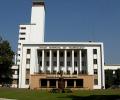
IIT Kharagpur gets more than 1,000 job offers in a record five days, with 144 companies visiting the campus till Dec 5

2022 is shaping up as the year brimming with job opportunities for people who possess relevant skillsets. Therefore, it is crucial for fresh graduates and young professionals to enroll in relevant certification courses to add more feathers to their introductory portfolio

While analysts predicted the Sensex to cross 30,000 in 2016, the index currently stands 12% lower at 26,400.

The second day of the placement season at Indian Institute of Technology (IIT) - Madras on Tuesday saw e-commerce major Flipkart Internet Pvt Ltd recruiting 19 students - the highest offer so far this season.

Microsoft has worked hard to exploit the advantage its mail software provides

Analysts forecast the fuel at $85 a barrel in 2015 and $90 a barrel in 2016; politics, demand-supply to pressure crude.

India's appetite for imported crude oil may wane in fiscal year (FY) 2023 from record levels in pre-pandemic 2019-20 fiscal as higher oil prices, a spillover from the conflict in Ukraine, and increasing use of biofuels affect domestic demand for petroleum products. Brent crude surged to a nine-year high, shy of a July 2008 record $147.50 a barrel, before declining to around $100 a barrel - but the volatility in commodity rates will slow global economic growth and use of fuels. Demand for all oil products may grow at only 2-3 per cent in FY23, slower than the current fiscal and nearly half the 5.5 per cent growth estimated by the petroleum ministry, according to industry officials.

He is meeting stalwarts such as Google's Eric E Schmidt, Carlyle's David M Rubenstein, Cargill's David W MacLennan, MasterCard's Ajay Banga, and Pepsico's Indra Nooyi.

Analysts expect RIL to report consolidated revenue of Rs 1.40 trillion and 10 analysts expect RIL's net income to be Rs 9,629 crore

BSE's, NSE's overnight liquid fund facility can help stock investors maximise returns

However, it still lags far behind the US, which leads with a market-capitalisation of $23.9 trillion through August 2014.

India must be prepared for a big, fat fuel import bill in FY23 - barring any further avatars of the Covid virus - as refiners crank up runs, or crude processing rates, to meet the growing demand for fuels, and crude prices soar. Capacity additions by an Indian state-run refiner will reinforce the need for foreign crude. Demand for all fuels is expected to increase by 3-8 per cent next fiscal from 2021-22, reaching pre-pandemic levels, according to analysts and industry experts.

The acquisition will allow Lenovo to diversify revenue away from the shrinking PC business.

Banerjee, 58, was educated at the University of Calcutta, Jawaharlal Nehru University and Harvard University, where he received his Ph.D in 1988. He is currently the Ford Foundation International Professor of Economics at the Massachusetts Institute of Technology.

... As the world swings from 'financialisation' to 'artificial intelligence', asks Ajit Balakrishnan.

Institutional investors - both foreign and domestic - lapped up the government's big-ticket share sales on Friday, helping it add nearly Rs 9,000 crore to its revenue kitty.

The FT report said the existence, size and investments of the highly profitable internal trading fund, which was set up three decades ago, have until now remained largely unknown outside a circle of former and current insiders.

Once a stock market darling, the jewellery chain heads for liquidation.

The sentiment around Indian equities remains positive and unchanged.
